
Skip to Main Content
Brown University
School of Public Health Brown University

Master of Public Health (In-Person)

Secondary Navigation Navigation

  • Classes of 2026 & 2027
Search Menu

Site Navigation

  • Home
  • About
    • Program Formats
    • Mission & Values
    • People
    • Competencies
    • Outcomes
  • Curriculum
    • The MPH Core
    • Electives
    • Classes of 2026 & 2027
  • Concentrations
    • Applied Epidemiology
    • Causal Epidemiology
    • Health Behavior Change
    • Health Economics and Policy
    • Qualitative and Community-Engaged Methods
  • Applied Learning
    • MPH Practicum
    • Thesis / Capstone
  • Research & Impact
  • Apply
Search
Master of Public Health (In-Person)

Qualitative and Community-Engaged Methods

Elevate community voices to design better, more sustainable public health solutions.

Breadcrumb

  • Home
  • Concentrations

Sub Navigation

  • Applied Epidemiology
  • Causal Epidemiology
  • Health Behavior Change
  • Health Economics and Policy
  • Qualitative and Community-Engaged Methods
Students at Research Day

Apply or request information

Invest in your future with confidence.

Apply

Qualitative and Community-Engaged Methods

Elevate community voices to design better, more sustainable public health solutions.

Qualitative and Community-Engaged Methods focuses on understanding health through the eyes of the people living it. In this concentration, you won’t just look at numbers; you’ll learn how to partner with communities to better understand public health issues that are priorities for them, and the solutions they are seeking. At Brown, we train you to collect and analyze stories and experiences—qualitative data—to turn real-world perspectives into evidence that shapes policy and practice.

You will gain hands-on skills used throughout the public health field, such as conducting interviews, leading focus groups, and practicing ethical community engagement. You’ll graduate ready to authentically engage community members as partners in public health, ensuring that health programs are built on trust, equity and a deep understanding of the real world.
Student Profile

You believe that numbers alone don’t tell the whole story. You are curious about people’s lived experiences and want to understand how culture, history, power and context shape health. You care about equity and trust, and you want public health work to be done with communities, not just about them. You are drawn to listening, learning and asking questions that numbers alone can’t answer.

As a student in Qualitative and Community-Engaged Methods, you will learn how to systematically gather and analyze qualitative data through interviews, focus groups and participatory approaches. You will develop practical skills for building authentic partnerships, conducting ethical research and translating community perspectives into evidence that can inform programs and policy. This concentration is for students who want rigorous methods and meaningful engagement, not one without the other.

As a public health professional, you envision yourself designing programs, conducting research or shaping policy in ways that are responsive to real community needs. Whether you work in government, nonprofits, health care systems or research settings, you consider success in terms of return for the community. The Qualitative and Community-Engaged Methods concentration prepares you to do exactly that: elevate community voices, strengthen public health practice and translate findings into action in ways that build community capacity and address systemic problems.

Skills You Will Master

  • Designing and conducting qualitative research, including interviews, focus groups and observations.
  • Asking meaningful questions and listening carefully to understand lived experience and context.
  • Analyzing qualitative data systematically, identifying themes, patterns and insights.
  • Working in partnership with communities, building trust and shared ownership of projects.
  • Applying community-engaged and participatory research approaches ethically and respectfully.
  • Translating community perspectives into evidence that informs programs, policy and practice.
  • Communicating findings clearly, using stories and qualitative evidence alongside data.
  • Navigating power, ethics and equity in public health research and practice.
  • Collaborating across disciplines and sectors, including nonprofits, health care, government and advocacy organizations.

Three courses are required for the Qualitative and Community-Engaged Methods concentration:

  • PHP2060: Qualitative Methods in Health Research (Spring Year 1)
  • PHP2061: Qualitative Data Analysis in Public Health Research (Fall Year 2)
  • PHP1810: Community-Engaged Research in Public Health (Spring Year 2)

You have space for 3 + electives. You can use them to create a bespoke elective bundle that reflects your unique passions and interests. Elective bundles that focus on Maternal and Child Health, Health Justice, Law & Advocacy or Substance Use and Harm Reduction would pair well with this concentration.

Concentration Lead

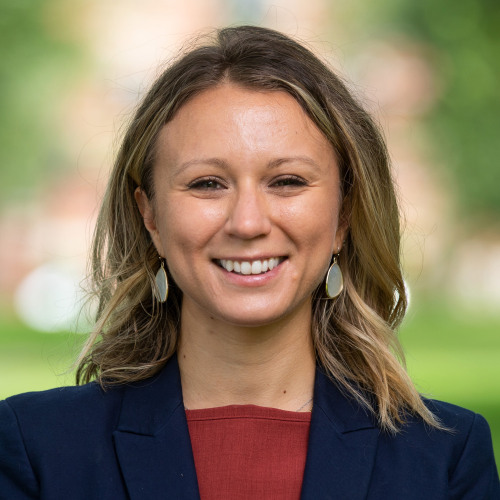
  • Bohlen

    Lauren Bohlen

    Professor of Behavioral and Social Sciences, Qualitative and Community-Engaged Methods Lead
    lauren_bohlen@brown.edu

Who is this for?

This concentration is only available for students matriculating in Fall 2026 or later. For earlier cohorts, please visit the Classes of 2026 and 2027 page.

Degree requirements for the classes of 2026 and 2027
Students at Research Day

Apply or request information

Invest in your future with confidence.

Apply
Brown University School of Public Health
Providence RI 02903 401-863-3375 public_health@brown.edu

Quick Navigation

  • Newsletter
  • Visit Brown
  • Campus Map

Footer Navigation

  • Accessibility
  • Careers at Brown
Give To Brown

© Brown University

School of Public Health Brown University
For You
Search Menu

Mobile Site Navigation

    Mobile Site Navigation

    • Home
    • About
      • Program Formats
      • Mission & Values
      • People
      • Competencies
      • Outcomes
    • Curriculum
      • The MPH Core
      • Electives
      • Classes of 2026 & 2027
    • Concentrations
      • Applied Epidemiology
      • Causal Epidemiology
      • Health Behavior Change
      • Health Economics and Policy
      • Qualitative and Community-Engaged Methods
    • Applied Learning
      • MPH Practicum
      • Thesis / Capstone
    • Research & Impact
    • Apply

Mobile Secondary Navigation Navigation

  • Classes of 2026 & 2027
All of Brown.edu People
Close Search

Qualitative and Community-Engaged Methods